
NIGERIA
Linking the formal and informal providers for
improved quality of healthcare in urban slums
NIGERIA
Linking the formal and informal providers for improved quality of healthcare in urban slums
Developing and institutionalising health system linkages between the public and informal sectors for improving the equitable provision and use of appropriate essential health services in urban slums

ABOUT THIS PROJECT
Nigeria’s urban population is expected to double by 2050.[1] A consequence of this rapid urbanisation is the expansion and increased numbers of informal settlements within and around large cities. These informal settlements, referred to as urban slums, are characterised by poor housing, lack of basic amenities and poor access to urban resources, including health, nutrition and education.
Rapid urbanisation and the growth of unplanned urban slums have gained global attention towards the need to ensure social inclusion and equitable access to urban resources, particularly for vulnerable groups. In Nigeria, as in other low resource settings, a critical area of concern is access to comprehensive and high quality health services. Urban slums bear a higher burden of communicable diseases, largely due to overcrowding, poor ventilation, low socio-economic status, and low literacy levels. Residents also face restricted access to high quality healthcare due to financial factors including the lack of social health insurance and heavy reliance on out-of-pocket payments. Therefore, improving access to high quality and affordable healthcare in urban slum areas in Nigeria became the primary objective of this project.
Informal healthcare providers (IHPs) are often relied on for healthcare in urban slums, and fill gaps caused by the absence of formal healthcare providers (FHPs). Informal healthcare providers include patent medicine vendors (PMVs), village health workers, traditional birth attendants (TBA), traditional healers and itinerant (travelling) drugs vendors, among others. These IHPs are widespread, offering low-cost services to poorer urban residents. They are trusted and frequently relied upon, playing an important role in the healthcare provision of slum residents.
However, the scope and quality of health services provided by informal providers are limited to their skills and capacities, raising legitimate concerns about the quality of care. To ensure that urban residents have access to a comprehensive, effective and high-quality range continuum of care, it is important to better integrate the diverse mix of healthcare providers (including both formal and informal providers) into the formal urban health system.
While collaborations between IHPs and FHPs do occur, particularly through patient and client referrals, these arrangements are informal and unregulated, with no oversight. Also, the services delivered by IHPs not captured in the national health information system. Combined with weak regulatory frameworks, this contributes to ongoing concerns about accountability, consistency and the overall quality of care available to urban slum residents.
The CHORUS project, conducted by the Health Policy Research Group, University of Nigeria, has used extensive findings from the baseline assessment, to build, support, and strengthen linkages between IHPs in Enugu and the formal health system, to improve access to quality and affordable health services in urban slums.
Using both quantitative and qualitative research methods, the interventions have been co-created with residents, community leaders, policymakers, formal and informal health providers, among others, to develop and evaluate a linkage model that improves access to quality services for urban slum residents.
The multi-component intervention strategy included:
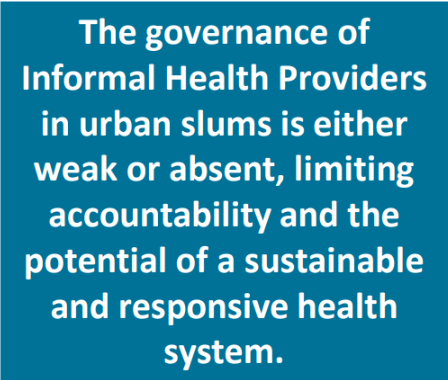
- Governance: Establishing oversight of the informal providers and community participation in governance and accountability structures
- Capacity Building: Including training and supportive supervision of both IHPs and formal primary healthcare workers to deliver quality healthcare on selected health services
- Service Delivery: Improving the quality and quantity of referrals from IHPs to the formal healthcare providers, and feedback from the formal services to IHPs
- Health Information Systems: Integrating informal providers into the health management information system and improving the quantity and quality of data reporting
As part of the collaboration, an Urban Health Unit was established within the Enugu State Ministry of Health to to manage and oversee the linkage between the informal providers and formal health system, providing sustainability of the model. There has been a reported increase in referrals to public primary care as a result of the training, supervision and recording of the referral linkages established through the project.
PUBLICATIONS
Informal–Formal Healthcare Services Delivery Nexus in Nigeria’s Urban Slums: A Reconnaissance Study
Inequities in Household out-of-pocket spending among urban slum dwellers in Southeast Nigeria
[1] https://www.urbanet.info/urbanization-in-nigeria-infographics/
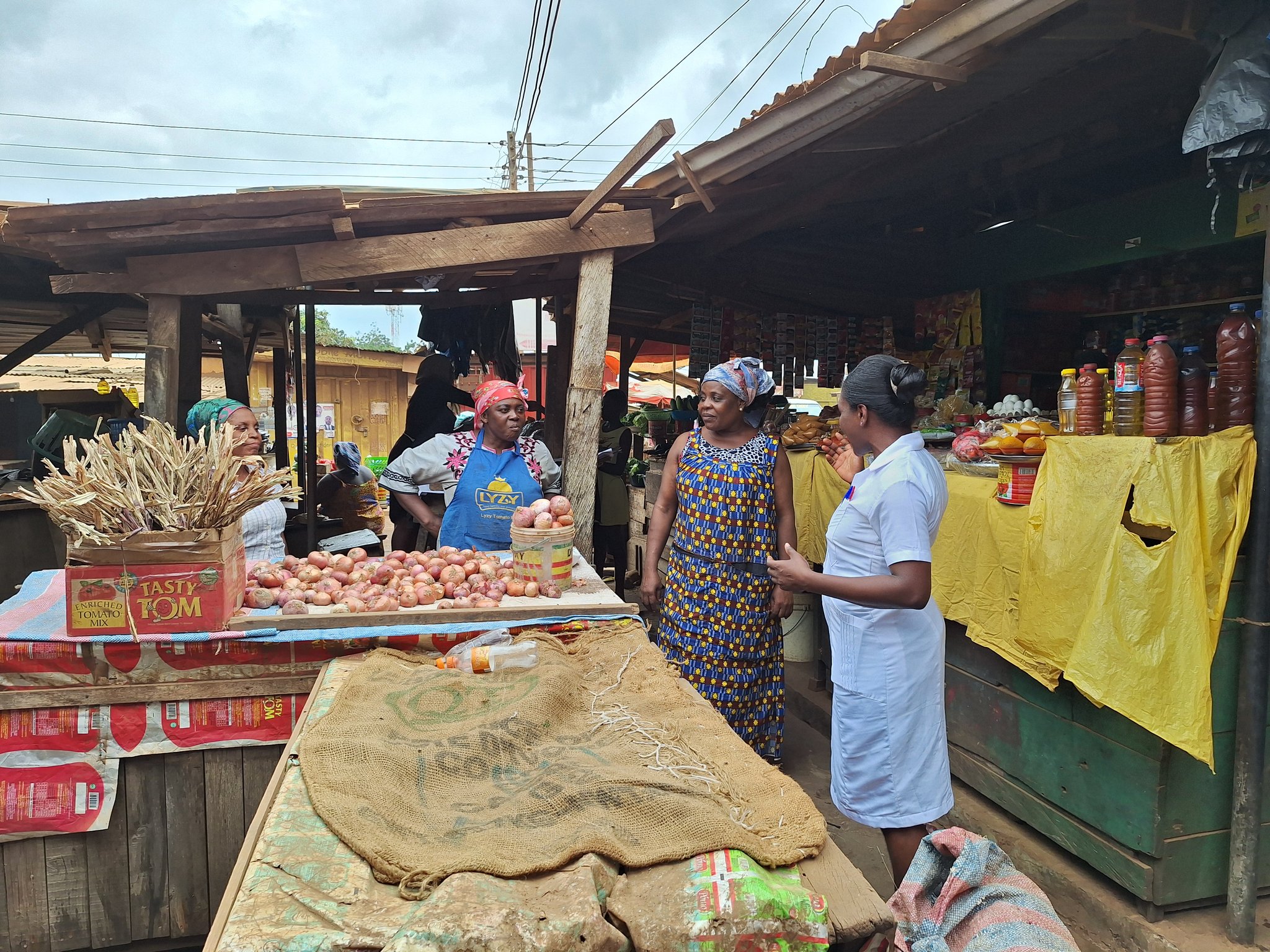
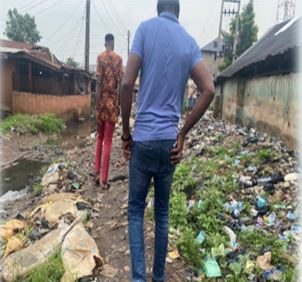
Photo by HPRG, University of Nigeria
OUTPUTS & PATHWAYS TO IMPACT
Nigeria

CHORUS Poster
CHORUS Presentations
CHORUS Poster
CHORUS Presentations
CHORUS Presentations
FEATURED PUBLICATIONS