
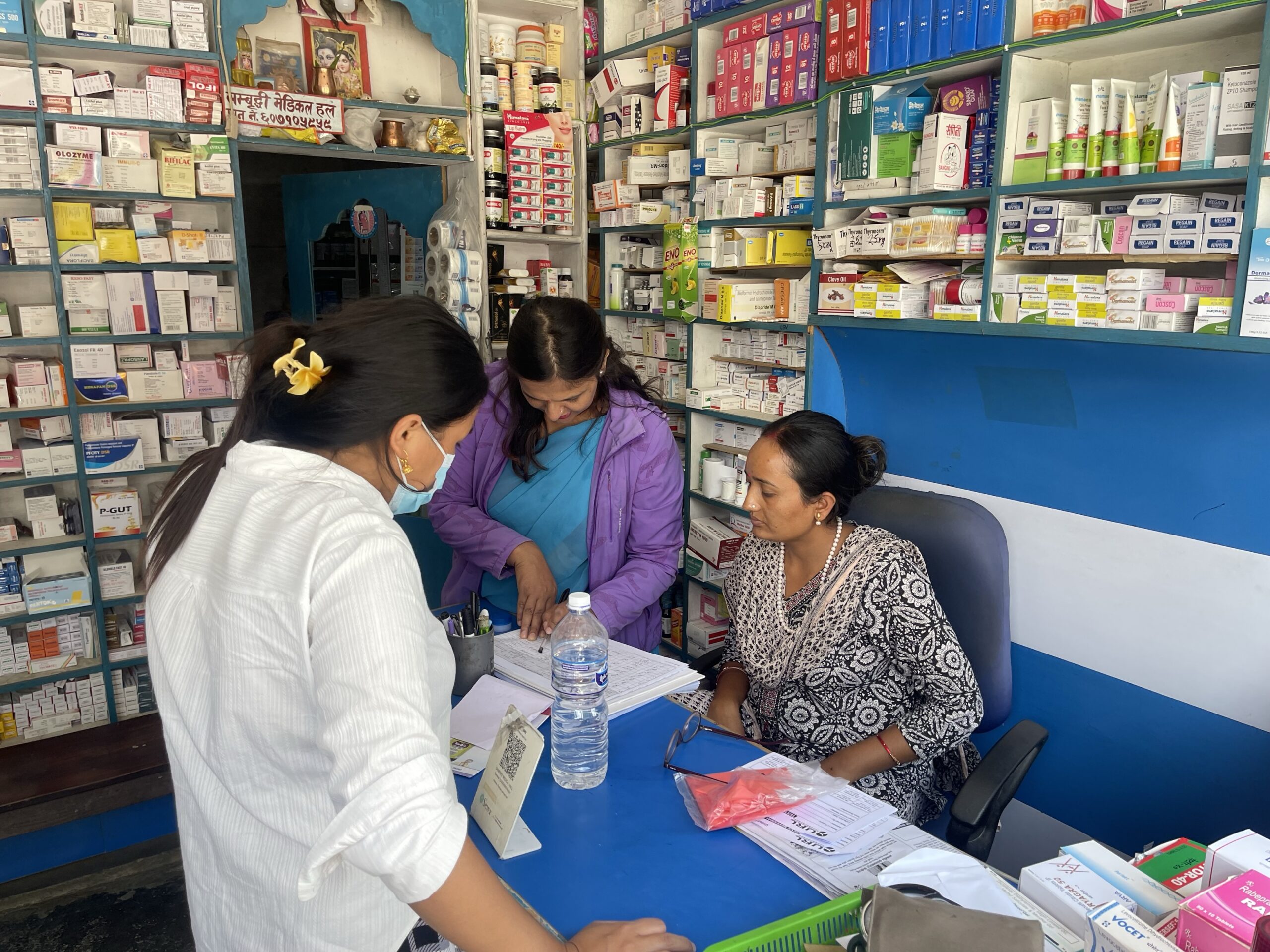
Pharmacies and NCD Care in Nepal: Connecting Communities to the Health System
In Nepal, pharmacies are often the first point of contact for urban residents seeking health care. They don’t just dispense medicines, they also provide advice and guidance. Some of the 29,000 pharmacies currently operating in Nepal also offer basic non-communicable disease (NCD) screenings, like blood pressure tests, when requested by clients. However despite their important role, many pharmacies are not fully equipped to manage NCD cases.
The CHORUS study in Nepal, conducted by HERD International, in collaboration with the Pokhara Metropolitan City Health Division, designed and implemented a model to link private pharmacies to the wider health system. The model provided technical support that empowered pharmacies to conduct hypertension and diabetes screening, refer patients to public health facilities as needed, counsel patients on health behaviours, and record and report patient data to the health system.
As pharmacies expanded beyond their traditional role of dispensing medicines to actively provide NCD care, we documented patients’ experiences of these services, and they are shared here.
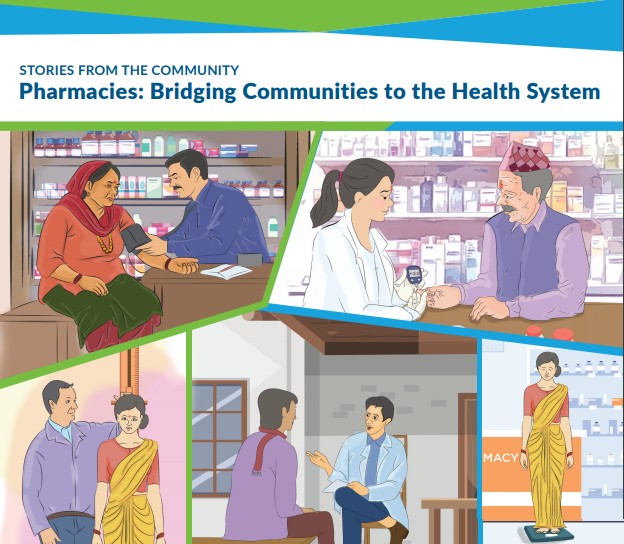
Case Study- Pharmacies: Bridging Communities to the Health System
For more information on the project, see the project page: Understanding the approaches needed to strengthen the service delivery of non-communicable disease programmes for the urban poor at the primary health care setting in Pokhara