
NEPAL
Strengthening urban health systems with an Urban Data Hub

NEPAL
Strengthening urban health systems with an Urban Data Hub
Strengthening urban health systems through an Urban Health Data Hub: Co-Designing Urban Health Data Hub in Budhanilkantha Municipality of Kathmandu, Nepal

ABOUT THIS PROJECT
Rapid urbanization in Nepal has brought both opportunities and challenges, particularly in the realm of public health. Governments and development institutions face challenges in obtaining quality, up-to-date data for research and data driven policy solutions. To bridge these challenges, this project aimed to develop and implement a co-designed Urban Health Data Hub in Budhanilkantha municipality of Kathmandu, integrating comprehensive data analysis and stakeholder collaboration to inform evidence-based advocacy and community-led interventions for improved urban health outcomes.
Using a multi-phase approach, including a comprehensive review of the health information systems and data sources related to health sectors, secondary data analysis, social mapping and household survey, our project works with stakeholders to co-design, develop and implement an Urban Health Data Hub in Budhanilkantha municipality.
Phase 1: Context Review of Health Data of Nepal
The first phase included document review, data mapping, data integration processes and formative research. The document review examined reports, policies, and datasets related to health, education, infrastructure, and other sectors within the urban municipality. Data mapping aligned health indicators with elements in other sectors, defining the structure and format for data integration.
Phase 2: Social mapping and Descriptive Household Survey
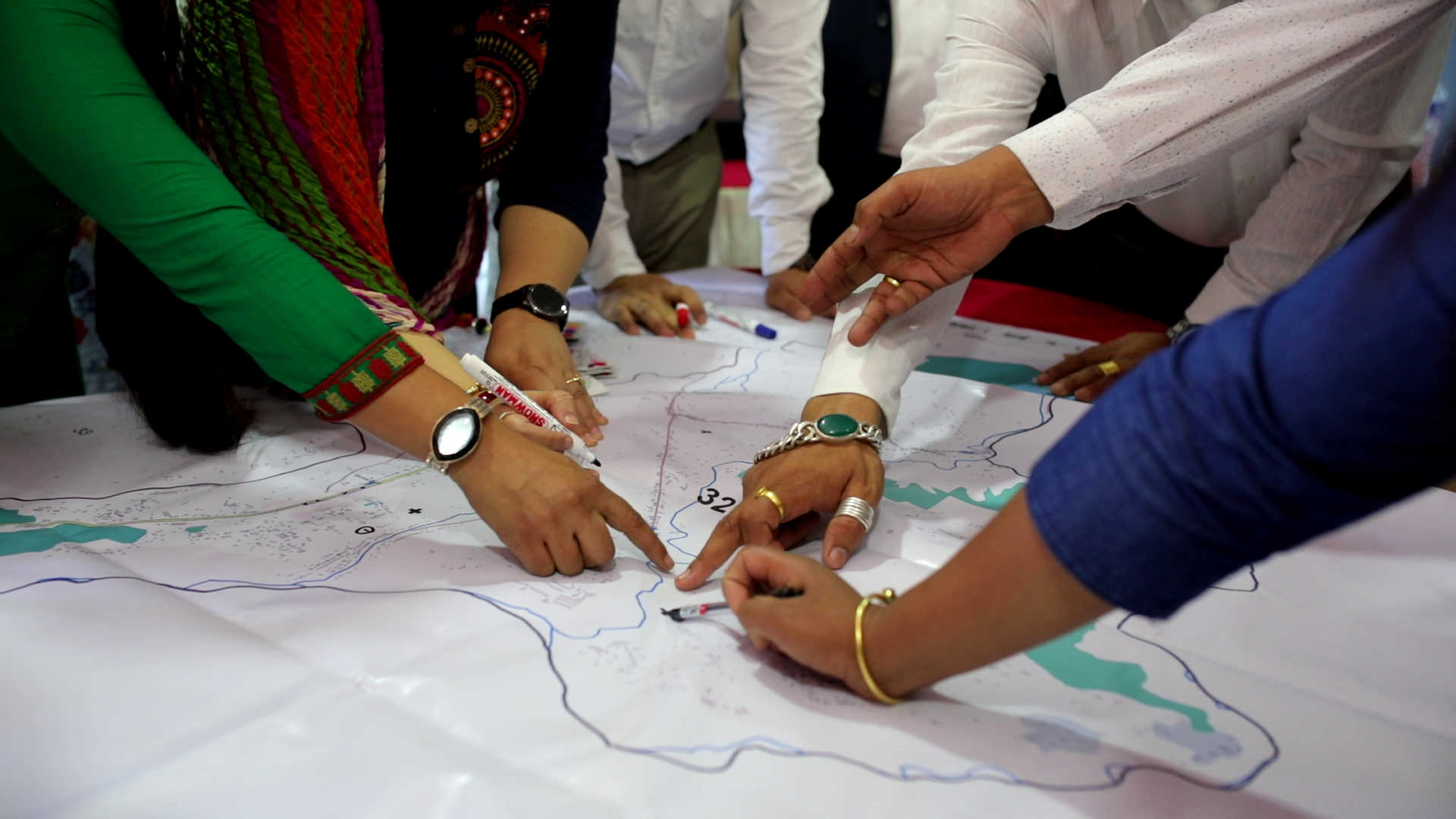
The social mapping, combined with transect and research walk, mapped one of the 13 wards of Budhanilkantha municipality. It encompassed demographics, living conditions, settlement patterns, and social infrastructure such as roads, schools, religious structures, and health facilities. A descriptive household quantitative survey was carried out to assess the proportion of NCDs and the associated behavioural risk factors among 960 households through cluster sampling.
Phase 3: Development and Implementation of Urban Health Data Portal
The third phase focused on the development of a centralised Urban Health Data Hub for Budhanilkantha Municipality. This dynamic portal features data visualisations of current, real-time, and forecasted health data with a major of focus on NCDs in the urban municipality. Crucially, the co-design approach partners with municipal officials in the full process and development of urban health data portal.
Once the urban health data portal was developed, the team established the Urban Health Data Hub on the website of Budhanilkantha Municipality. Ownership by the municipality will ensure the continuous integration of the portal into the existing infrastructure, and overall sustainability of the hub.
The project has provided data for decision making, as well as a municipality owned integrated platform to inform resource allocation and decision making from across government sectors. This has been a practical tool for multisectoral collaboration for improved urban health.
City and national level government officials are keen to develop similar hubs for other urban and rural areas, with technical support.
PUBLICATIONS
OUTPUTS & PATHWAYS TO IMPACT
Resource
Co-designing an Urban Health Data Hub Promoting Evidence Use in Urban Health Systems in Budhanilakantha Municipality, Nepal