
Unsafe Cities, Unhealthy Lives: Health Cost of Crime and Why Safer Cities Mean Healthier Nigerians
By Ethelbert Chukwudi Agu, Dr. Tochukwu Charles Orjiakor, Dr. Pamela Adaobi Ogbozor, Chizona B. Ugwuoke, Prof. John Eze and prof. Obinna Onwujekwe, University of Nigeria
“People with high blood pressure are many. At times, there will be screams and trembling, and everyone will be running. Some will be shocked and too scared, and some will run so fast that they exceed their capacity. And then, they develop high blood pressure, heart attacks and even stroke” (Excerpt from a male respondent’s narrative in southern Nigeria, taking part in the Urban Crime & Health Project)
Recent mass killings in Nigeria have mainly taken place in rural regions. Examples include the Woro killings in Kwara State and the Yelwata massacre in Benue State, each resulting in approximately 200 deaths. Nonetheless, urban areas have experienced a notable increase in violence, with coordinated assaults on citizens. Notable incidents include the attack in Owo, Ondo State, where around 40 worshippers were killed in June 2022, and a bomb blast in a mosque in Maiduguri in December 2025, which resulted in about 5 deaths and nearly 35 injuries.
Users and providers of healthcare services live in significant fear
Crimes and their aftermaths, without a doubt, affect the delivery of health services across Nigerian health facilities. They cause casualties that strain already overwhelmed systems, target health workers and infrastructure, and instil fear among providers and patients. Recent incidents include the kidnapping of medical doctors, the murder of a nurse in the country’s capital, and coordinated armed assaults on health facilities.
Nigerian health workers continue to migrate abroad at an annual rate exceeding 200% since 2024 in search of better opportunities, and the impact of crime and insecurity appears largely underestimated. As a result, there is a growing situation where, on one side, the burden of illnesses rises as people are injured and traumatised, and hesitant to seek emergency care, especially out of hours, for fear of becoming victims. On the other side, health workers and facilities that are expected to treat crime-related injuries, face serious threats and may rightfully avoid providing care by staying away from work.
Research on crime and health is increasingly gaining attention: What the results reveal
The Health Policy Research Group at the University of Nigeria has expanded its work over the past two years to include insecurity, crime, and their connections to health system efficiency. In 2023, it initiated a CHORUS Innovation Fund study on urban crime and the health system in Aba and Onitsha.
The focus on urban areas comes from Nigeria’s rapid urban growth, which is associated with slow economic progress and weakening social services, thereby sustaining high crime rates. This does not mean rural areas are less important or experience fewer occurrences of crimes, as they also face serious crimes such as banditry, terrorism, mass killings, and kidnapping. But we believe that studying urban crime and its impact on the health system can also provide useful lessons for rural areas, helping to guide a stronger national strategy for improving security and health system performance.
Our research has identified critical security concerns for both service users and providers, along with the policies and strategies required to address them. These include:
- Physical and psychological health concerns: In the studied communities, substance use was common and often led to serious crimes like armed attacks, sexual violence against women and minors, and theft from health facilities. Victims suffered physical injuries, sexually transmitted diseases [STDs] and hypertension, and experienced significant mental health issues affecting them, their families, and friends. Insomnia was frequently reported. Those who used harmful substances, including perpetrators, often presented severe mental health problems and sought care at facilities that lacked qualified mental health professionals. Additionally, these facilities occasionally had their equipment and infrastructure damaged by criminal elements, which reduced their ability to provide care. Often, health workers avoided coming to work.
- Social and economic concerns: In a country where 75% of health expenses are borne by citizens’ private funds, the importance of economic productivity is immense. When citizens’ earnings are stolen, markets collapse or close early out of fear, and supplies run out because no transactions occur, the dominant question in communities becomes, “Where do we get money to pay for healthcare?” Also, in our study, health authorities expressed frustration over the waste of government resources, noting burglaries of health facilities and the expiration of supplies when services are halted by crime. Reduced participation in social events was seen as harmful to psychological wellbeing and detrimental to vital communal values, which are necessary for citizens to remain healthy.
- Healthcare administration concerns: The operation of various health programmes and health facilities in urban areas face significant setbacks due to crime and insecurity. It hampers the monitoring and supervision of healthcare services by health authorities and the execution of outreach programmes in certain parts of these cities because of concerns for participants’ safety and residents’ reluctance to attend events. The fear of crime also leads to absenteeism among health workers and causes them to refuse night shifts or to live in staff quarters at Primary Health Centres. This reduces the number of patients visiting these facilities, especially at night, and causes delays or even failures in health service delivery.
“The monitoring visits and support supervision I should be doing, sometimes I am careful. I make sure the place is safe before going there, or I can wave it away. And when I go there, I hardly stay because of my safety. This is why some of these unsafe places are denied certain interventions. Some preventative care may not get to the people there because of insecurity […] Something like an epidemic, outbreak that needs to be investigated. Safety of a place is vital for us. Once the place is unsafe, we drag our feet.” (Excerpt from a director of primary healthcare in southern Nigeria, taking part in the Urban Crime & Health project)
What can be done?
There is an urgent need for policymakers and public health authorities to acknowledge that rising crime and insecurity are major drivers of disease burden and disruptions in healthcare delivery. Stakeholders and participants in the study have put forward a series of recommendations:
- Health authorities must actively pursue collaborations with law enforcement agencies through memoranda of understanding (MoUs) to ensure that health facilities and their surroundings are prioritised in security measures, responses, and communication.
- Conflict-prone areas need to be mapped, and peacebuilding efforts should be viewed not only as a security benefit but also as crucial to healthcare. This underscores the importance of long-term investment in peacebuilding initiatives.
- Health facilities should prioritise their security and safety by meeting minimum standards, including security lights, reliable power, perimeter fencing, monitored gates, security personnel, and approved communication systems with security operatives.
- Primary health facilities should be equipped to identify and address the psychosocial effects of crime, especially on mental health and social wellbeing. This may involve training staff in trauma-informed care and mental health support, hiring psychosocial professionals such as psychologists and social workers, and prioritising the development of preventive strategies and social interventions to reduce crime.
- Implement community-based programmes that highlight the health impacts of crime and combine legal and psychosocial support measures to foster more law-abiding communities.
“So the government has to make our business their business. See, that road is bad. Even when we report to the police, before they make their way through that road, the criminals will be done and gone […] people living here are now so afraid; their hearts are unsettled.” (Excerpt from a male respondent’s narrative in southern Nigeria, taking part in the Urban Crime & Health project
Please see the blog also on the website of the Health Policy Research Group, University of Nigeria: Unsafe Cities, Unhealthy Lives: Health Cost of Crime and Why Safer Cities Mean Healthier Nigerians
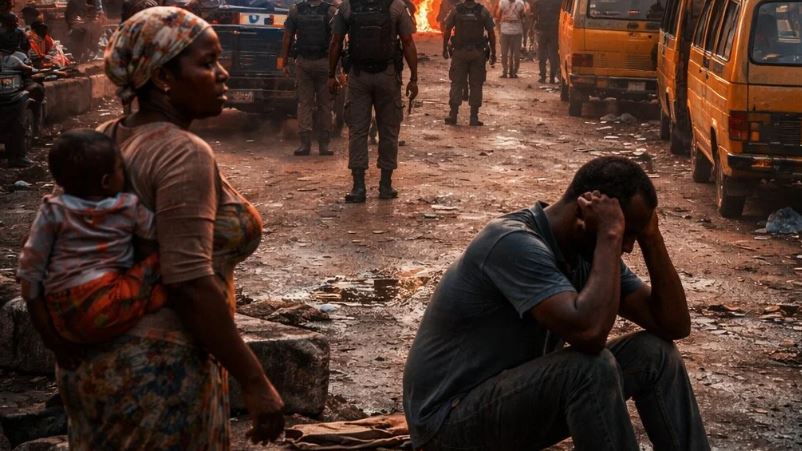
Feature image is AI generated