
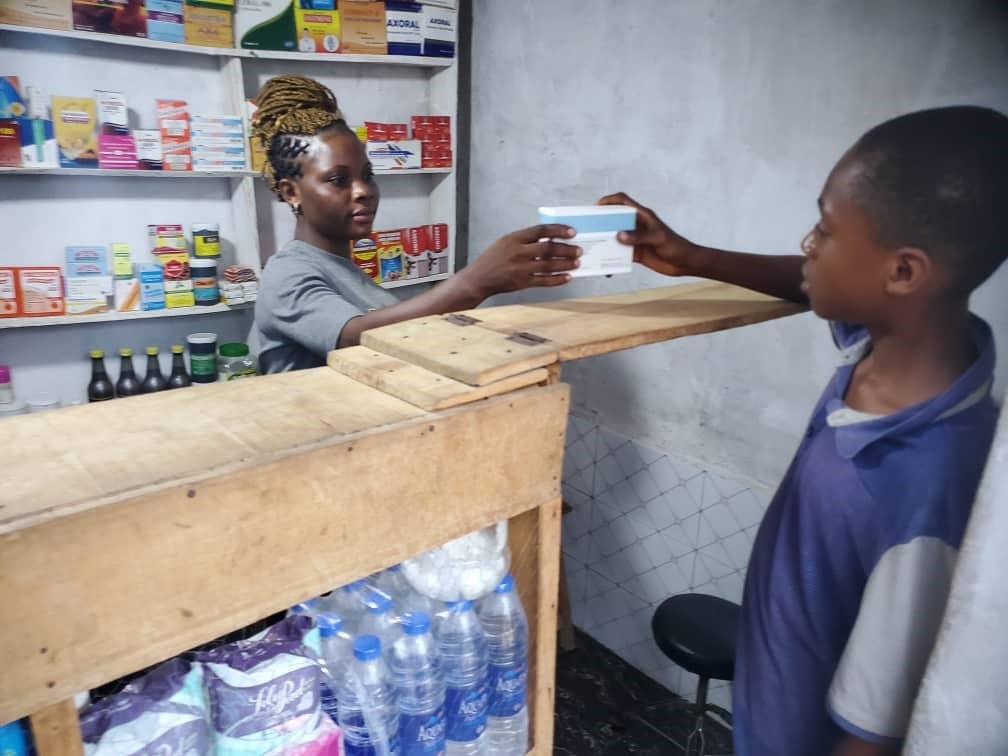
Misuse of antibiotics in Nigerian urban slums, and how drug vendors (chemists) can help
By Chibuike Agu, Ifunanya Clara Agu, Irene Ifeyinwa Eze, Chinyere Mbachu and Obinna Onwujekwe, at the Health Policy Research Group, University of Nigeria, and Rebecca King, and Mahua Das, at the University of Leeds
In urban slums across Nigeria, formal healthcare providers like the primary health facilities are characterised by poor patronage, often due to factors of high cost and inefficient service delivery. This has led to high patronage of patent medicine vendors (PMVs) or chemists, who are trusted by communities, accessible, and cost-friendly, yet often operating outside defined regulations of the formal health system. While PMVs fulfil an important role, their practice of selling antimicrobials, often called antibiotics, without a prescription raises serious concerns about antimicrobial resistance (AMR). AMR occurs when germs mutate and become resistant to medicines that would normally eliminate them, leading to treatment difficulties, increased spread of diseases, and a higher risk of death.
As PMVs are now deeply integrated into these urban slums, primarily due to the shortcomings of formal health services, their role in combating AMR has become crucial and indispensable. Could PMVs, therefore, become key partners in fighting this global health threat of AMR, and even more in urban slums where there are challenges such as poverty, social exclusion, overcrowding, and limited access to basic services such as adequate healthcare?
AMR is a silent, growing public health threat
The misuse of antibiotics or antimicrobials such as ciprofloxacin, ceftriaxone, amoxicillin, and others, which are marketed under brand names like Flagyl, Augmentin, Amoxil, Ampiclox, and Ampicillin, has become widespread in Nigeria. According to data, 42% of adults misuse antimicrobials, and only 68% follow proper prescription guidance. This has resulted in antimicrobial resistance (AMR) becoming widespread, threatening Nigeria’s health security and placing a burden on global public health. A key underlying factor is that the sale of medicines in Nigeria remains largely unregulated, due to the dominance of PMVs who have built community trust and an organisational structure capable of challenging formal health authorities.
According to the Pharmacy Council of Nigeria, there are only about 19,000 licensed pharmacists nationwide, catering to a population of over 220 million people. Of those licensed pharmacists, over 2,800 left Nigeria for better opportunities between 2018 and 2023. Moreover, approximately 200,000 PMVs operate nationwide. Thus, in many underserved areas such as urban slums, PMVs dominate the medicines market, as licensed pharmacists usually focus on wealthier neighbourhoods. Unfortunately, the highly inefficient primary health facilities in urban slums have worsened the situation, leaving urban residents with PMVs as their most accessible option for medicines.
The unregulated sale of antibiotics, frequently without prescriptions, is speeding up the spread of antimicrobial resistance (AMR). This results in longer hospital stays, treatment failures, and higher death rates. These issues also impact government healthcare costs and reduce overall population productivity.
These concerns motivated the Health Policy Research Group (HPRG) at the University of Nigeria, conduct a study as part of the CHORUS Innovation Fund. in Ebonyi State, south-eastern Nigeria. This research focuses on the quality and dispensing patterns of over-the-counter antimicrobials, as well as how urban slum residents utilise these medications.
With the rise in AMR, are PMVs trusted community health providers or hidden threats?
PMVs are far more than just drug vendors; many residents refer to them as actual “doctors” and trust them as their primary healthcare providers when illness occurs. They are familiar, accessible, and offer affordable ways to buy medicines, which makes them popular among urban slum residents. Additionally, as urban slum residents find it difficult to access formal healthcare providers like medical doctors, PMVs have become even more like health messiahs in the communities they serve.
“…they [urban slum dwellers] have no way to easily contact a medical doctor; they regard us as their doctor” – Male PMV, 45

Why do PMVs sell antibiotics without prescription?
In our study, we found that PMVs sell antibiotics without prescriptions, often for incorrect conditions, which poses a risk for antimicrobial resistance (AMR). This dispensing behaviour results from a complex interplay of economic factors, social expectations, and cultural norms influencing both providers and consumers in urban slums. We identified four primary drivers:
Client Pressure: Customers expect instant access to medications. If one PMV refuses, another may agree, so vendors feel compelled to meet expectations to keep their business.
“…If you tell them to go and meet a doctor… they will meet the same class of people like us in another shop… so in such a case, you sell the medicine to him [without prescription].” – Male PMV, 41
Economic Survival: PMVs depend on daily medicine sales to survive. Turning away a customer results in lost income, which can make it difficult to maintain ethical practices.
Influence of subcultural norms in society: Cultural norms and health misconceptions further complicate the situation. Many community members and some PMVs believe antimicrobials can cure nearly all illnesses. For example, it is common to sell antibiotics alongside antimalarials for treating malaria. It is also usual to combine multiple drugs without guidance, and many depend on advice from family or past experiences. These beliefs promote irrational use and diminish the effectiveness of life-saving medicines.
Weak Regulatory Oversight: Stakeholder interviews consistently highlight weak regulation as a key factor enabling the improper sale of antimicrobials. Despite laws banning the sale of prescription drugs like antibiotics by PMVs, these sales often happen with minimal supervision. Enforcement is hindered by inadequate staffing, limited funding, and weak accountability mechanisms, allowing PMVs to operate with little oversight. Consequently, they tend to focus more on keeping their businesses running than on safeguarding public health.
“When you have a system where there is low regulatory supervision, of course everybody will go gaga and want to do anything that he thinks will bring him money…” – Male, Policymaker, 54
This combination of lax oversight, client pressure, and economic need has led to the normalisation of inappropriate antimicrobial dispensing among PMVs.
Who is most affected by poor prescription of antimicrobials?
The residents of Abakaliki’s slum areas, including Nkaliki, Kpirikpiri, and Hausa Quarters, are mainly low-income earners and informal workers. Like every other urban slums, these households typically experience overcrowding, poor housing conditions, limited clean water access, and inadequate sanitation. In Hausa Quarters, longstanding settlers from northern Nigeria live alongside indigenous locals, often in crowded settings. Women, the poor, and individuals with little or no formal education face the biggest obstacles to accessing formal healthcare. For these groups, PMVs and self-treatment are not just matters of convenience; they are often their only viable healthcare choices. As a community member states:
“Sometimes the need may be urgent, and the money I have may not be enough to go to the hospital, but if I go to the chemist, I can buy medicine from them, and by the grace of God, it will work.”– Female participant, Nkaliki.
These social inequalities perpetuate informal and unregulated treatment practices, hindering efforts to improve adherence to antimicrobial prescriptions and guidelines.
A pathway forward: engage PMVs as partners, rather than punishment
Despite obstacles, PMVs can contribute to solutions. Many are willing to improve their practices if they receive proper training, recognition, and support. Instead of relying only on enforcement, a balanced strategy is essential—one that combines capacity-building, incentives, and clear, enforceable regulations. This approach not only encourages compliance but also fosters trust and accountability. Treating PMVs as partners, with appropriate oversight, provides a practical, people-centered way to promote responsible antimicrobial use and reduce the spread of AMR.
What needs to be done?
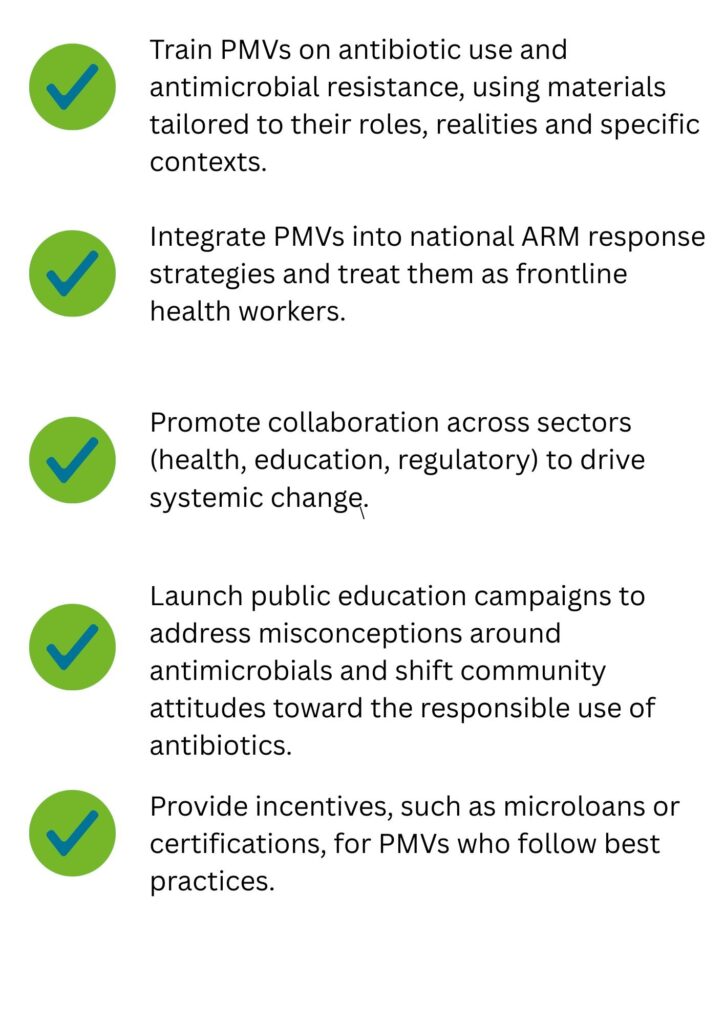
PMVs are already at the forefront of healthcare in Nigeria’s urban slums. Instead of seeing them as part of the problem in the fight against AMR, they should be recognized as strategic partners. Empowering PMVs through knowledge, supportive supervision, and integration into formal health systems aligns with Nigeria’s Health Sector Renewal Investment Initiative, which focuses on health security and quality health systems, as well as global AMR action plans. This approach can fast-track progress towards Universal Health Coverage (UHC), bolster community-based care, and significantly contribute to national and global targets for controlling AMR and enhancing population health outcomes.
Photo credit: Health Policy Research Group, University of Nigeria