

Key Messages for the Fourth UN High-Level meeting on the Prevention and Control of Non-communicable Diseases and the Promotion of Mental Health.
The fourth UN High Level Meeting of the General Assembly on the prevention and control of NCDs and the promotion of mental health and wellbeing (HLM4) takes place in New York, on 25th September 2025. Head of States and Government will meet to set a new vision for the prevention and control of NCDs towards 2030 and beyond. A Zero Draft Political Declaration sets out actionable steps to fast track progress on NCDs and mental health over the next five years, focusing on tobacco control, preventing and scaling up effective treatment of hypertension, and improving mental health care, in order to achieve global targets by 2030: 150 million less people using tobacco, 150 million more people have hypertension under control, and 150 million more people having access to mental health care.
The focus of the zero draft on strengthening health systems, particularly primary care; population-wide policies for prevention; and multi-sectoral responses to address the wider determinants is welcomed. This focus resonates with CHORUS findings from our research with health system actors in cities across Bangladesh, Nepal, Ghana and Nigeria.
Our research highlights that urban-specific approaches are frequently needed. We have identified the particular vulnerability of city residents living in informal settlements (Hasan et al 2024) and the catastrophic health expenditure of urban residents with chronic conditions (Siqueira et al 2022). The tendency to take generic health systems solutions that may work well in rural contexts and expect them to be appropriate and effective in complex urban areas must be challenged.
We share findings from our research in CHORUS to highlight SIX urban-specific challenges in relation to the recommendations outlined in the zero draft.
1. Create Health Promoting Environments Through Action Across Governments (zero draft pg 4)
Our qualitative research with women and girls in two cities in Bangladesh highlights particular challenges they face being physically active.
Gender norms coalesce with:
a) limited access to free parks or other exercise facilities;
b) concerns for safety and security;
c) misconceptions about the benefits of exercise;
d) a vehicle dominated built environment with no space for walking
Challenges were amplified for those with disabilities. Even where there are attempts to improve accessibility, these are poorly designed. (Anne et all 2025, awaiting publication. See blog). Improving urban infrastructure, particularly green spaces, has the potential to improve both mental and physical health. Through our study, women and girls developed a scorecard to assess the extent to which their neighbourhoods promote physical activity for women. The scorecards are a simple tool for women and girls to hold city corporations to account and make sure voices are heard to counter pressure from developers.
The UN High Level meeting provides opportunity to recognise the need to support city governments—frequently under resourced and with limited capacity—to be able to support the needs of citizens to create female friendly urban spaces that encourage physical activity and improve mental health.
2. Working Across Sectors
The zero draft highlights the need to work across sectors to address NCDs. This is vital in cities where prospects for changing NCD risk factors frequently lie beyond the health sector.
CHORUS research in Ghana identified challenges, but also possibilities for progress in bringing sectors together at local government level in cities. Working with local government leaders from education, planning, transport and health, we found inadequate understanding of governance, a lack of technical capacity, politicization and political party interference, policy incongruence and a lack of resources.
CHORUS research in Nepal highlights that the integration of data across sectors can provide a way to bring sectors together to jointly monitor and plan to tackle the causes of ill-health, particularly NCDs.
3. Strengthening Primary Healthcare (zero draft pg 5)
Strengthening primary healthcare is a prerequisite for patient-centred NCD care. Greater recognition to the structure of urban health systems is needed if this goal is to be achieved in urban areas.
Across all cities where CHORUS has been conducted, the limited availability of public primary healthcare is a consistent feature. This gap has been filled by private providers, both informal and formal, for-profit and NGOs. Identifying ways to link this plurality of providers to drive up quality, enable prevention, early detection and diagnosis, and support long term care, including referral and back referral between providers is
vital.
Our needs assessments in all four countries found informal and formal private providers are frequently the first point of contact for low-income urban residents, particularly for NCDs. We assessed the extent these providers were equipped to support clients with common NCDs such as hypertension and diabetes. In Nepal, 87% of the 352 pharmacies studied were providing hypertension services, and 49% providing diabetes services, yet we found low levels of preparedness to deliver these services, with mean scores of 31/100 and 32/100 for diabetes and hypertension respectively. (Shrestha et al 2025). In Nigeria, we found only 9% of informal providers across eight slums in Enugu and Onitsha had accurate knowledge of risk factors and symptoms of hypertension, and 8% for diabetes. (Mbachu et al 2024). The need to work with these multiple providers to establish systems that connect then to drive up quality and improve accessibility needs to be recognised during the UN High Level meeting, and appropriate recommendations developed.
CHORUS research highlights the potential for these linkages, and shows there is a willingness from the informal and private sectors to strengthen links with the public sector (Onuh et al 2024: Obi et al 2025). It highlights how it is both necessary and feasible to build links with private, NGO and informal providers for NCD screening, health education and referral. There is currently little evidence on how to build links across the different providers to improve appropriate management of NCDs. Finding and sharing ways to build these networks across the plurality of providers should be emphasised at the UN High Level meeting.
4. Consider Gender & Intersectionality
Urban men struggle to access primary care in cities, due to long working hours and perceptions of primary care.
CHORUS analysis found marked gender differences health seeking behaviour for NCDs (see fig 1). Our qualitative findings help explain this. In Dhaka for example, urban residents perceive primary care (government and NGO) to only address maternal and child health, and not for NCDs or for men. Rural areas have a strong primary care system in Bangladesh, featuring NCD ‘corners’. This is not the case for urban Bangladesh. We assessed how prepared urban government and NGO clinics were to provide appropriate prevention, diagnosis and management of hypertension and diabetes, finding preparedness for hypertension to be 46.8% in government clinics, and 32.5% for NGO clinics. Preparedness for diabetes was lower at 31.6% in government clinics and 34.9% in NGO clinics. (Salauddin et al. in press).
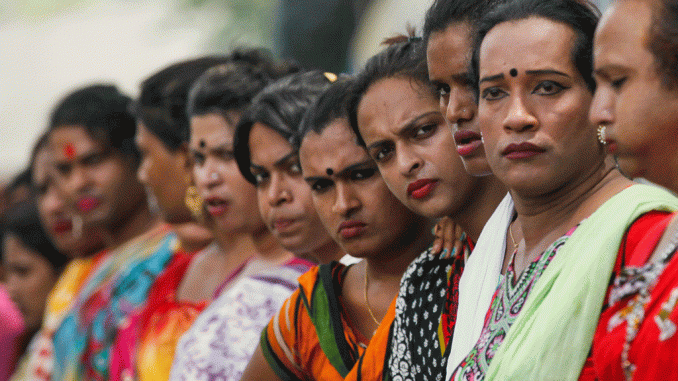
Gender differences need to be taken into consideration when calling for strengthened primary care to address common NCDs. Particularly stigmatised communities, such as the hijra or third gender, and people with disabilities, have been identified as facing particular challenges in accessing urban primary care in our work in Bangladesh and Nepal.
5. Increase Sustainable Financing (zero draft pg 7)
The call to increase sustainable financing for NCDs is welcome. Given that the majority of the urbanites use private providers—particularly pharmacies and informal providers—as the first point of care, greater consideration should be given as to how private providers can help increase access to NCD treatment, without driving up catastrophic health expenditure for households.
6. Strengthen Data and Surveillance to Monitor Progress and Hold Ourselves Accountable (zero draft pg 8)
CHORUS work in Nepal has shown how data can help to bring together sectors in local government to address NCDs. The zero draft recognises the role of rapid and unplanned urbanisation in fuelling the risk behaviours such as poor diet, physical inactivity, tobacco and alcohol use, as well as the impact of air pollution, poor housing and inadequate water, sanitation and waste collection systems. By identifying data from across multiple sectors (education, urban planning, housing and health), the CHORUS team in Nepal have been able to support local government in Kathmandu to understand the interconnected risk factors for NCDs. The process of bringing sectors together within the same municipality enabled them to find collective solutions to protect the health of residents.
In Bangladesh, CHORUS used data to bring together NGO and government primary care providers to improve the management of diabetes and hypertension. Through using the ‘simple app’, endorsed by the government and being rolled out in rural areas, the team were able to support both NGO and government primary care clinics to record patient data on hypertension and diabetes electronically. This not only has the potential to improve patient care, but also has proved important in forming a bridge across the NGO and government primary care sector. Interoperability with the national routine health management system means that for the first time, decision-makers in city governments and the ministry have data on hypertension and diabetes in their urban area.
Understanding the power of data from across sectors to not only understand the problems but connect beyond their silos to address these wider determinants of NCDs should be emphasised within the UN high level meeting.
Summary
The CHORUS teams have been embedded in urban health systems in Nepal, Bangladesh, Nigeria and Ghana for the last 5 years. A fundamental lesson from our research is that urban and rural health systems need to be considered distinctly. Policy makers cannot assume that a solution designed for rural areas will automatically work in urban contexts.
Our research highlights the importance of:
• A multi-sectoral response;
• Recognition of the role of local city governments;
• Strategies to work across the plurality of public and private (formal and informal) health providers;
• And above all, the need to understand and respond to the diversity of the urban populations.
Download the CHORUS Key Messages FCDO UN High Level Meeting on NCDs here
Banner Image: Photo by Matthew TenBruggencate on Unsplash
Image 2: Photo by ARK Foundation